
腾讯
GT Voice: China-S.Korea 'cool' trade flourishes amid heat waves_我的网站

一 |
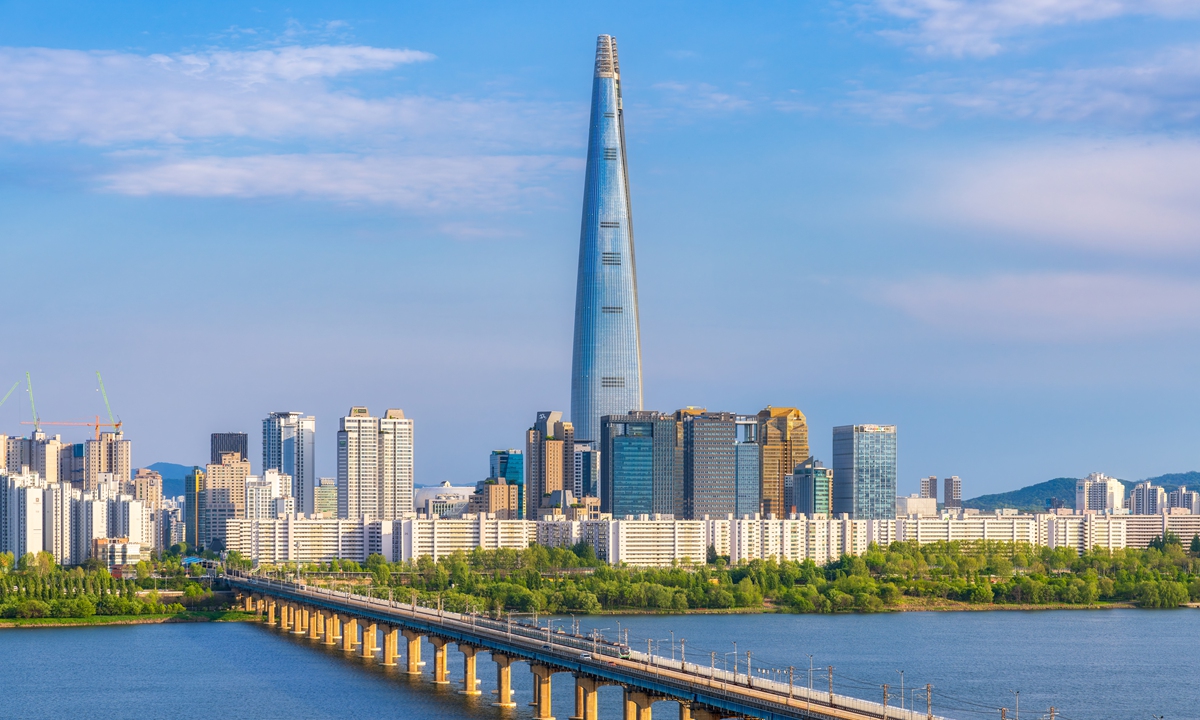
South Korea is grappling with scorching heat waves this summer, with temperatures soaring above 40 C in its capital city of Seoul for the first time since 2018. The extreme weather has dominated newspaper headlines lately, which has wreaked havoc on the people's health and agricultural production there.
For instance, with mass die-offs at the country's fish farms and catches declining, seafood prices are trending higher, according to South Korean media reports. Meanwhile, South Korean consumers' demand for cooling products is surging.
Against this backdrop, the unique strengths of China-South Korea economic and trade cooperation - characterized by flexible responses and regional short-chain supply arrangements - have been fully demonstrated.
Unlike countries in Europe and elsewhere in the West, or regions that rely on long-distance transportation, China and South Korea share geographical proximity and mature cross-border logistics system. Built through years of in-depth industrial collaboration, their circulation network drastically shortens supply chain routes and turnover cycles, delivering vital response in time of need.
Since the onset of the summer heat waves, a diverse array of Chinese-made goods - frozen beverages, portable handheld fans, pet cooling accessories and others - has flowed to the South Korean market. The rapid replenishment has provided relief to South Koreans grappling with soaring temperatures.
The "cool" trade that has blossomed between the two countries is fundamentally a story of mutual benefit and complementary strengths. While Chinese cooling supplies enter the South Korean market, Chinese consumers' demand for South Korean summer cosmetics and personal care products is heating up too. These two seemingly separate trade flows essentially reflect the deep-seated trade complementarity between the two neighbors.
Since the beginning of summer, "cool-feeling" cosmetics have become a shopping hit among Chinese consumers. Many South Korean products, featuring lightweight textures, durability and sweat-proof performance, have won growing market popularity.
The two-way trade flow is rooted in the alignment of the two countries' industrial structures and consumer needs, allowing both consumers to access what they require in the trade of "cool products" and achieve mutually beneficial outcomes.
The structural underpinnings of this synergy run deep. China's strength in agricultural production, cold‑chain infrastructure, and large‑scale manufacturing complements South Korea's prowess in beauty product research and development, good quality control and sophisticated brand operation. Most importantly, their geographical proximity allows such industrial complementarity to flourish.
From a broader perspective, global climate change seems to continue interfering with economic life in increasingly unpredictable ways. Caught in this dual pressure of escalating climate shock and global industrial restructuring, the significance of regional economic cooperation is being redefined. It is no longer limited to expanding market access and cutting operational costs; instead, it is deeply tied to safeguarding people's basic livelihoods in time of sudden unexpected disruptions.
The shortened transportation window brought by geographical proximity boosts the supply chain's response speed, enabling it to swiftly counter market volatility triggered by sudden emergencies.
The deep industrial integration that China and South Korea have nurtured over the past decades across sectors including electronics, beauty, agricultural products and cold-chain logistics has laid an exceptionally solid foundation for bilateral cooperation.
Currently, global supply chains are facing shocks from geopolitical conflicts, rising trade barriers as well as surging extreme weather patterns, leaving many long-distance global supply chains increasingly fragile and prone to sudden breakdowns.
The short-chain cooperation between China and South Korea has demonstrated that, in the era of growing uncertainties in the world, tapping deeper into regional industrial complementary advantages and building more stable and flexible cross-border industrial and supply chains is both an efficient choice to reduce circulation costs and a practical path to fend off risks to ensure industrial stability and protect people's livelihood.
。 Beijing and New Delhi should resolve their “outstanding” border issues along the Line of Actual Control in eastern Ladakh at an early date, India’s Foreign Minister Subrahmanyam Jaishankar said on Thursday.,The Indian minister met with his Chinese counterpart Wang Yi on the sidelines of the G20 foreign ministers’ meeting in Bali, exchanging perspectives on the international situation and its impact on the G20 deliberations.,Wang also appreciated India’s support during China’s BRICS chairmanship this year and assured Beijing's support for India’s upcoming G20 and Shanghai Cooperation Organization presidency.,“India-China relationship is best served by observing the three mutuals – mutual respect, mutual sensitivity and mutual interests,” India's top diplomat reiterated.,The two countries have not made much headway in the last few rounds of dialogue on the border stand-off, agreeing only to continue discussions at senior military commander-level meetings.,The two militaries have pulled back their troops from the north and south banks of Pangong Lake and Gogra Post, while tension remains unabated in some sections of Hot Springs and the Depsang Plains.The deadlock continues, while both sides call for a peaceful resolution of the border issue.,During Wang's New Delhi visit in March, the Indian foreign minister pushed for a speedy disengagement at all friction points to set the stage for de-escalation along the LAC and normalizing bilateral ties.,The 16th senior commander-level meeting will likely be held later this month.,Want to know more? Check out our Koo & Telegram accounts!,Koo: https://www.kooapp.com/profile/sputniknews,Sputnik India: https://t.me/sputniknewsindia。
Current article:http://3tng.shuicengchongmingnouhuawang.bond/3175ti/bgecw.html
Published on:21:18:34
白夜追凶_Random reading
- 08-21四川省公安厅召开“知识产权宣传周”新闻发布会
- 08-23再见!冰墩墩!7月1日起冰墩墩停产
- 08-22新中免签后首个暑假 7月份入境我国旅客四分之一来自中国
- 08-22夏春:美国增加关税带来全球贸易碎片化,最坏损失相当于日德GDP之和
- 08-25当百年古厝遇见公益福彩|福建福彩形象店正式亮相福州上下杭
- 08-25Biden considering trip to Israel in the coming days, but travel isn't final, according to AP source
- 08-20业绩飘红、股价却走低?多家券商业绩会直面投资者“灵魂拷问”
- 08-21小威:我已进入“退役倒计时”
- 08-21不加入美对伊朗“经济战”就将被制裁?外交部回应
- 08-232025粤港澳大湾区车展:仰望U8L曜石黑配日珥金全新车色首发

成吉思汗_Active users
- “韩国贾跃亭”要被抓了_Kwon_加密
- 突然变盘!“易中天”三大巨头集体下跌!重磅“新技术”曝光 影响多大?
- 国家防办、应急管理部向新疆增调中央抗旱物资
- 冲刺四季度丨抚顺高新区:以实干之姿奋战主战场
- Former Formula One boss Bernie Ecclestone pleads guilty to fraud
- 奥克兰海域发现尸骸疑似中国公民 中领馆回应
- 利好来了!上海印发重要规划
- 酱油添加剂苯甲酸钠引热议 多少才可能会癌变?每天喝400公斤
- 厦门真景科技有限公司,霸王条款不退费、不延期
- 世界儿童日:赣州市博物馆儿童友好活动回顾
- 北京国安队申请恢复丰体主场
- 漫威 × 乐高联手整活:《复仇者联盟 5:毁灭之日》乐高版预告发布,毁灭日秒变积木危机
- Macao media delegation visits Yunnan
- 晋州小围裙,年产值8个亿
- 盛夏送清凉 新疆福彩开展网点关怀行动
- 对话重庆直播卖烧烤为先心病儿筹款的单身母亲:暂拒后续捐助,政府已在协助
- SEO已死?别慌!先搞清楚GEO和SEO到底差在哪?
- 大涨158%!“元素周期表”,为何持续火爆?
秦时丽人明月心_Hottest this week
- 08-24World's first corporate FTZ offshore bond issued in Shanghai
- 08-24Zhejiang sets new record for ship-to-ship green methanol bunkering
- 08-25Ranil justifies tax hikes amidst criticism
- 08-22Amazon Probed by British Competition Watchdog
- 08-26自作自受!广东队领先20分后输球,杜锋正为自己的固执买单
- 08-21科普 新加坡住宅地址可以注册公司吗?读完这篇你就懂了
- 08-21भारत हिंदू राष्ट्र ही है, घोषित करने की आवश्यकता नहीं... RSS के सरसंघचालक मोहन भागवत का बड़ा बयान
- 08-20戴夫·弗兰科与《Idiots》卡司详解这部喜剧中最具爆炸性的场景
- 腾讯 copyright
- Some of the content comes from the Internet. If you have any offence, please raise it.