杜海涛沈梦辰同框
四川“十五五”城市更新:9800余个项目近万亿元投资惠民,四川“十五五”城市更新:9800余个项目近万亿元投资惠民_我的网站

A |
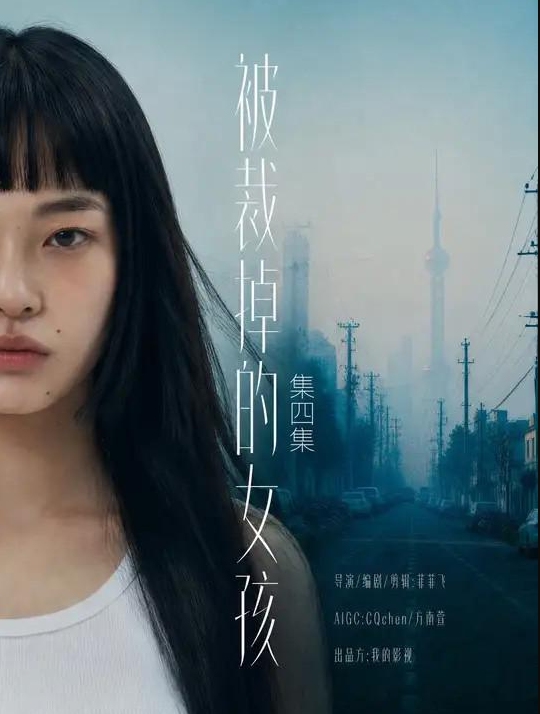
The Girl Who Was FiredA virtual AI actress has gathered massive followers and stirred widespread heated debate on Chinese social media - unlike conventional celebrities, this breakout star is entirely artificially generated.
Fang Taozi, an AI-generated character who stars in the hit AI short drama series The Girl Who Was Fired, has posted lifestyle vlogs, launched social media accounts, shared her breakfasts, workouts and pets, landed brand deals and has a fanbase.
Since the drama debuted on short video platform Douyin on June 12, it has accumulated 200 million views. Fang's Douyin account has attracted more than 400,000 followers.
Fans interact with her as if she were a real celebrity, creating fan edits, discussing fictional relationships and building a community around her imagined life.
This raises a question that has become increasingly urgent for the entertainment industry: Does Fang Taozi represent the first generation of AI celebrities? The answer depends on how "celebrity" is defined, said Zhang Peng, a cultural researcher and associate professor at Nanjing Normal University, in an interview.
If celebrity status is measured by public attention, emotional connection and commercial value, Fang appears to meet many of the criteria. She has fans, a personal brand and even advertising opportunities.
Whether AI can truly become stars depends not on the technology itself, but on their ability to forge genuine emotional connections with audiences and sustain their appeal over time, added Zhang.
However, Shi Wenxue, a Beijing-based cultural critic, argues that AI stars have indeed emerged, but they should be viewed as part of the broader lineage of virtual idols.
From the 1958 US virtual musical group Alvin and the Chipmunks to Hatsune Miku, Luo Tianyi and the hyper-realistic digital human Liu Yexi, virtual performers have existed in various forms for decades.
From the perspective of how she is created, Fang Taozi represents a technological advance. Her emergence is largely a product of the current economic environment of the film and television industry.
The rise of AI performers has also triggered concerns among human actors, especially those working in smaller productions.
Human performers bring personal experience, emotional interpretation and unpredictability - qualities that remain difficult to reproduce. But for industries that require large volumes of affordable content, AI characters offer obvious advantages: They do not age, can work continuously and can be customized for different audiences.
AI short dramas are cheaper, faster and free from the risks associated with human performers, raising concerns over the future of lower-level entertainment jobs in areas such as short dramas, advertising, background acting and voice work, said Zhang.
In Shi's view, beneath the debate lies a familiar tension: technological efficiency versus the threat of displacement for human workers.
The question is not whether AI will completely replace actors, but which parts of acting and entertainment can be automated, he noted.
Rather than presenting an AI figure only as a digital image, Chinese platforms appear to be building complete entertainment ecosystems around AI characters, including dramas, social accounts, fan interactions and commercial partnerships.
China's AI stars have grown out of the audience's desire for emotional companionship, while Hollywood's AI experiments have been shaped by industry battles over efficiency and costs, noted Zhang.
According to Shi, Fang Taozi's sudden popularity is, in many ways, a reflection of audience psychology. Whether they are moviegoers, fans or casual viewers, audiences have grown weary of formulaic content, scripted fan service, predictable performances and fragile celebrity personas. An idol like Fang Taozi offers an alternative: She cannot be involved in scandals, play diva or break character, and her persona can be adjusted to meet audience demands. But the model also comes with risks, particularly the limitations of its creators and the potential for excessive commercialization.
。 成都8月21日电 (王利文 罗梅歌)四川省人民政府新闻办公室8月21日在成都举行“万千气象看四川·起步奋进‘十五五’”系列主题新闻发布会,解读《四川省城市更新“十五五”规划》(下称《规划》)。

B | 四川省住房和城乡建设厅厅长邓立军介绍,四川“十五五”时期城市更新共规划项目9800余个,总投资近万亿元。四川省人民政府新闻办公室8月21日在成都举行“万千气象看四川·起步奋进‘十五五’”系列主题新闻发布会,解读《四川省城市更新“十五五”规划》。四川发布供图 四川省于8月14日正式公布《规划》,标志着四川城市更新进入体系化推进的新阶段。《规划》提出,到2030年,新型城镇化水平、城市发展能级、生态宜居水平不断提升,“公园城市、安逸家园”全面推进,具有四川特色的现代化人民城市建设取得重要进展。到2035年,城市更新体制机制更加完善,城市结构优化、动能转换、品质提升、绿色转型、文脉赓续、治理增效取得显著成效,彰显锦绣天府富足安宁、巴山蜀水秀美安澜、人民生活幸福安逸的现代化人民城市基本建成。

C | 邓立军介绍,围绕目标设定,四川研究提出20项规划指标,其中传导国家规划指标10项,结合四川实际设置特色发展指标10项,涵盖常住人口城镇化率、省级城市更新重点片区数量等高质量发展指标,城镇老旧小区、危旧房、城中村改造等民生指标,“蜀里安逸”消费新场景、幸福河湖建成数等特色指标,以及城镇房屋赋码落图等治理指标。 “四川城市类型多元,不能‘一刀切’。

D | ”邓立军表示,对标国家部署细化确定了7大重点任务,四川专门增加了“构建城市更新区域协同格局”专章,这是基于四川省情的一项重要创新。具体而言,成都都市圈推进高质量更新;绵阳、宜宾、泸州、南充、达州等省域经济副中心和乐山区域中心城市实现特色化、差异化更新;广大县城重在增强综合承载能力。 为保障《规划》落地,四川承接国家“一个优化、六个建设”的重点任务和四川省7大重点任务,形成了6大专栏,系统梳理谋划建立“六大基础工程+两大重点工程”项目储备库。

E | 其中,“六大基础工程”重点是夯实普惠性民生底座,“两大重点工程”是《规划》的特色,主要是成都都市圈、省域经济副中心及区域中心城市牵引性更新工程和城市更新百片千亿焕新工程,起到辐射带动和示范引领的作用。全省 “十五五” 时期城市更新共规划项目 9800 余个,总投资近万亿元,有力保障规划落地的完整性、系统性、有效性。
Current article:http://3tng.shuicengchongmingnouhuawang.bond/news/20260826_3639497.html
Published on:20:23:32


 【“十五五”开局看河北】电商直播助企出圈 数字经济赋能县域产业
 票房超115亿!2026暑期档临近收官热度不减
 墨香迎远客 金石待知音 全国书法“蒲公英计划”扎根临平超山
 申华控股:上半年亏损1857.89万元,同比减亏
 匈牙利滑冰协会发文感谢张晶的贡献
 《推理学院》8月27日迎新活动开启